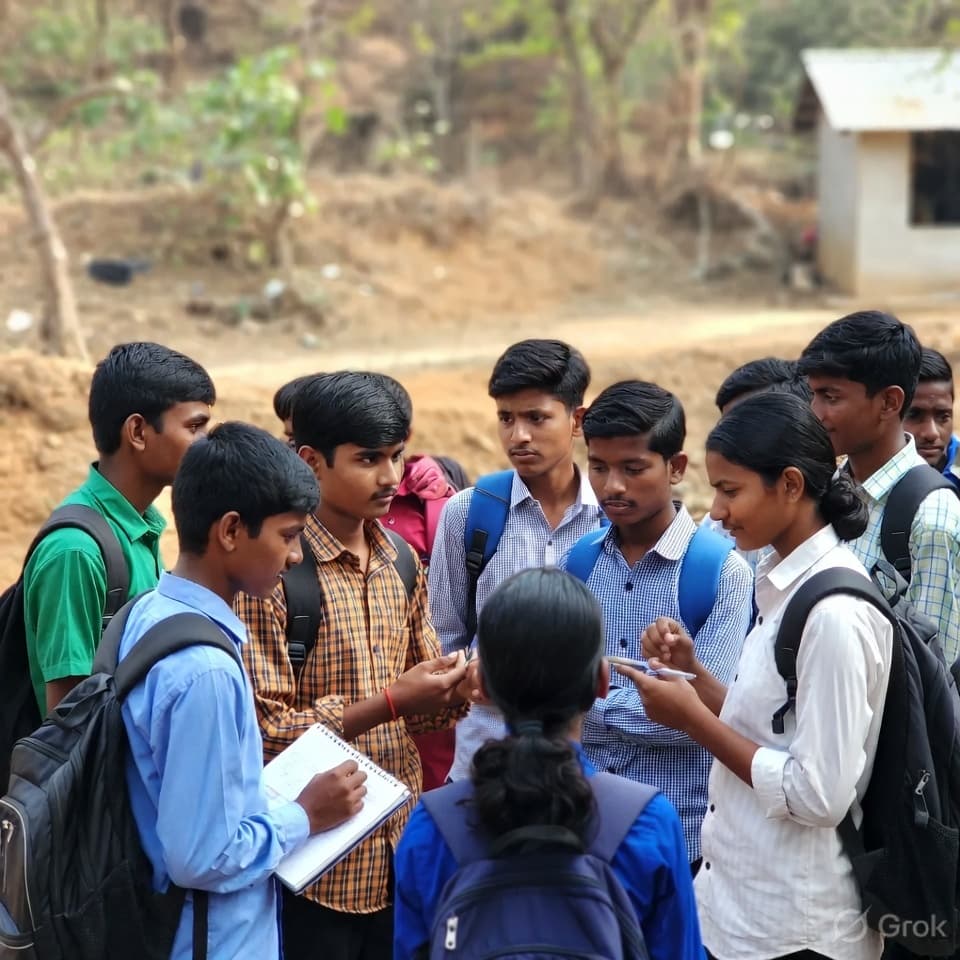
I want to tell you about a student I can't stop thinking about.
He is somewhere in Dhule or Nandurbar or Jalgaon right now. Second year B.Com. His father farms two acres. His mother runs the house. He got a smartphone last year — his first one. He's smart in ways that matter: he knows the price of onions in three mandis. He knows which carpenter in his village does the best door frames. He can negotiate in Ahirani with a farmer and in Hindi with a shopkeeper in the same afternoon.
He has never done an internship. Not because he doesn't want to — but because he hasn't found one that fits his world. One that doesn't need him to relocate to a city, or have a laptop, or already know things the program claims to teach.
So he spends his summer at home. Waiting.
That student — the one who carries deep knowledge about rural India but hasn't yet found a way to use it — is exactly who Gram Scholars was made for.
I know him because I come from the same world
I grew up in a village near Nashik. My father is a farmer. I went to IIT Bombay — and for a while, I thought getting out was the only thing that mattered. Get a degree. Get a job. Move to the city.
But every time I came home during semester breaks, I watched my father struggle with things that kept him stuck — finding labour during harvest, renting equipment, getting a fair price for his produce. These aren't unsolvable problems. They're connection problems. The demand exists. The supply exists. They just don't find each other.
That's why I built KaryoSetu — a voice-first discovery platform that connects rural workers, farmers, artisans, and service providers with the people who need them, in their own language, on a basic smartphone.
But building KaryoSetu taught me something important: understanding rural India requires people who already live in it.
You need people who speak the local language. Who know which lane the blacksmith lives on. Who understand the rhythms of a weekly bazaar.
So what is Gram Scholars?
Gram Scholars is a free 8-week program where college students learn AI tools like ChatGPT, go back to their own villages, and do real fieldwork — mapping every business, service provider, artisan, and farmer in their community. They come back with ground-level data, a research report, and real skills. And they earn a certificate, a Letter of Recommendation, and an internship experience that's rooted in their own strengths.
Any college student from any department can join: Agriculture, Computer Science, Commerce, Arts & Humanities, Economics, Science, Education, or Law. Everyone learns AI. Everyone does fieldwork. Everyone comes out with something real.
The journey: what actually happens in 8 weeks
I designed this program like I was building it for my younger self. Every week has a purpose. Every session builds on the last.
Building your base
You start with understanding the rural economy — not from textbooks, but from the ground up. How does demand and supply really work in a village? Then: how startups turn ideas into products. Digital tools you'll use every day — Google Workspace, Canva, phone photography. And field research methods — how to interview someone properly, how to observe, how to take notes that matter.
Learning AI, hands-on
You learn ChatGPT, Gemini, and other AI tools — not theory, but by doing. How to prompt, how to verify, how to turn a messy conversation into a clean insight. Then we go domain-specific: Agriculture students learn AI for crop advisory. Commerce students use AI for business profiling. Arts students learn to document stories. Law students generate simple legal explainers. You build something real with AI — an output you can show to anyone.
This is where everything changes
You go home. Your own village. Your own taluka. And you start mapping. The carpenter down the lane. The woman who makes pickles. The farmer who needs equipment. The electrician everyone calls but nobody can find online. You talk to people you've known your whole life — but now with a researcher's lens. You photograph their work. Record their stories. Fill their details on the KaryoSetu app.
You become the expert on your village
Raw fieldwork becomes a Village Report. You use AI to find patterns — what services are missing, what businesses could grow, where the demand-supply gaps are. You present your findings to me and the KaryoSetu team — real research backed by ground truth. The best reports get published on the KaryoSetu blog with your name as the author. Everyone who completes gets a verified certificate.
"But what do I actually get out of this?"
Fair question. Let me be specific.
What you walk away with
AI skills — ChatGPT, Gemini, prompt engineering, data analysis. Hands-on, not theory.
A real internship for your resume: "Gram Scholars Research Intern — KaryoSetu Technologies Pvt Ltd." 6-8 weeks. AI tools. Field research. Published report.
A verified certificate with a unique validation code — signed by me, Founder & Director of KaryoSetu Technologies Pvt Ltd. Anyone can verify its authenticity online. See a sample certificate →
A Letter of Recommendation for top performers — a real letter that talks about what you specifically did.
Published research — your village report, on the internet, with your name on it.
What your village gets
Visibility. For the first time, that carpenter, that beautician, that tractor owner — they exist on a digital platform. People can find them.
Connection. The farmer who needed a tractor can now find one nearby. The family looking for a plumber doesn't have to ask five neighbours.
Dignity. A skilled worker who served 50 families can now reach 500. Their livelihood expands because one student decided to document them.
Hope. When a college student walks through the village taking photos of people's work, writing down their stories — it tells the village: someone sees the value in what we do.
Why it's free — and always will be
Our scholars come from families where every rupee counts. Many are first-generation college students. Making this program free isn't a marketing decision — it's the only decision that makes sense.
Here's the deal: I design and run every session myself. KaryoSetu is bootstrapped — no big investors behind this. But if I can't invest my time in students who genuinely need this opportunity, then building KaryoSetu loses its meaning for me.
And it's not charity — it's a fair exchange. Scholars learn AI, fieldwork, and research skills. KaryoSetu gets ground-level data about rural businesses and services that simply doesn't exist anywhere else. Trust built by local students in their own communities. And future team members who understand the mission because they've lived it.
Both sides give. Both sides gain. That's how it should work.
Why I believe in this so deeply
When I was building KaryoSetu, I met so many college students from rural backgrounds. Smart, capable, hungry to do something meaningful. But many of them didn't know that their deepest asset was right in front of them — their village.
The fact that you can talk to the sarpanch in Marathi. That you know the weekly bazaar's rhythm. That you understand why a farmer needs to hear something in his own language before he trusts it. That's not a limitation on your resume. That's the most valuable skill there is.
What Gram Scholars believes about rural students
- Knowing your village intimately is a real research skill — and it has immense value
- AI tools are the great equaliser — a student in Nandurbar can now do analysis that used to need expensive consultants
- The future of Indian technology will be shaped by people who understand all of India — not just the metros
- You don't need to leave your village to do meaningful work — you need to look at it with new eyes
- One student, one smartphone, and 8 weeks of focused effort can create real, lasting change in a community
Gram Scholars exists because this potential deserves a platform.
How to join
No entrance exam. No fee. No complicated process.
Requirements: Currently enrolled in any Indian college. Have a smartphone. Willing to do fieldwork in your village or town. Available 3-4 hours daily for 8 weeks. That's it.
Applications are open on a rolling basis. The program is part of KaryoSetu Academy, which also offers free business guides for rural entrepreneurs across almost every category.
If you're reading this and you're a college student who hasn't found the right opportunity yet — consider this one.
Go home. Look at your village. Really look at it — the people, the businesses, the problems, the potential.
Your village has been waiting for someone to see it clearly. That person might be you.
Trupti Gavit is the Founder & Director of KaryoSetu Technologies Pvt Ltd. She built Gram Scholars because she believes the future of rural India will be built by people who actually live there. Apply at karyosetu.com/gram-scholars.
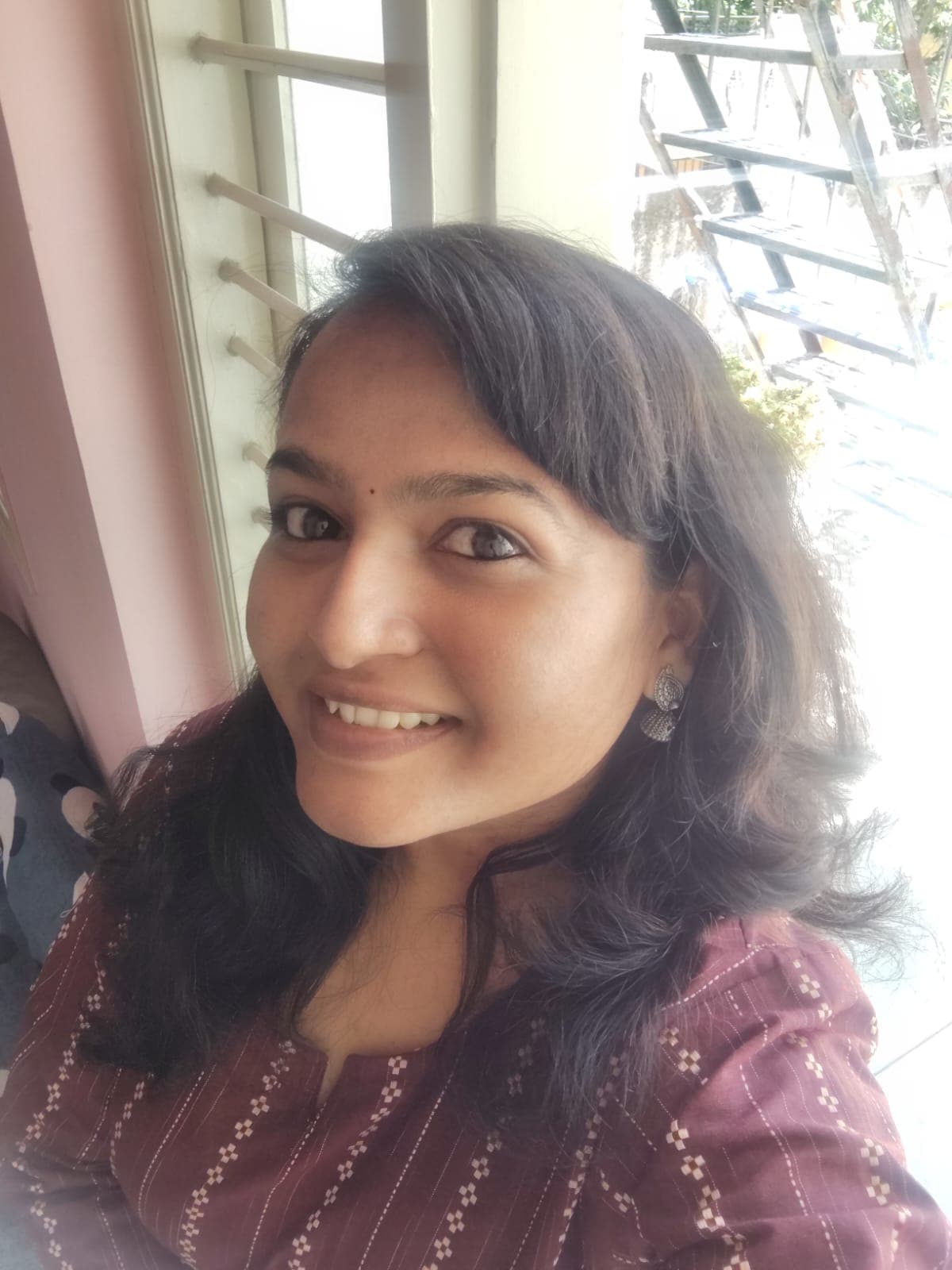
Trupti Gavit
Founder & Director, KaryoSetu Technologies Pvt Ltd
Founder & Director, KaryoSetu Technologies. From a tribal village near Nashik. Building India’s first voice-first rural discovery platform to empower rural India.
Read full story